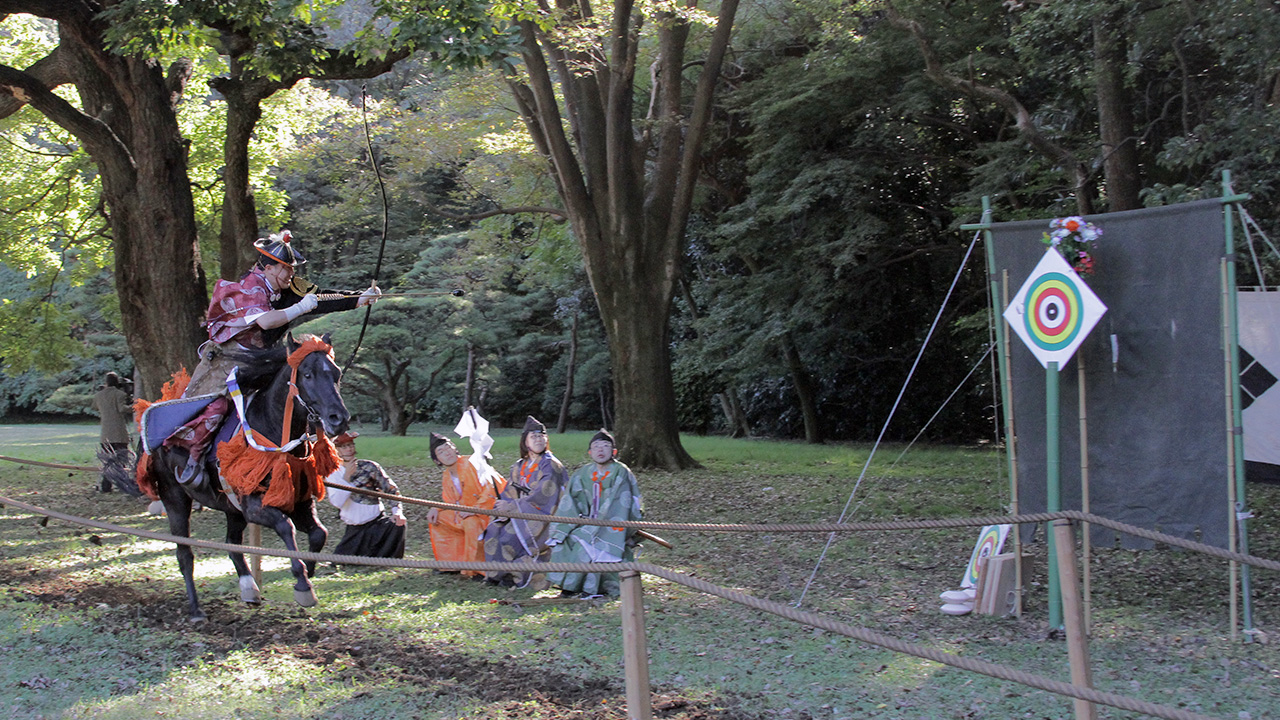
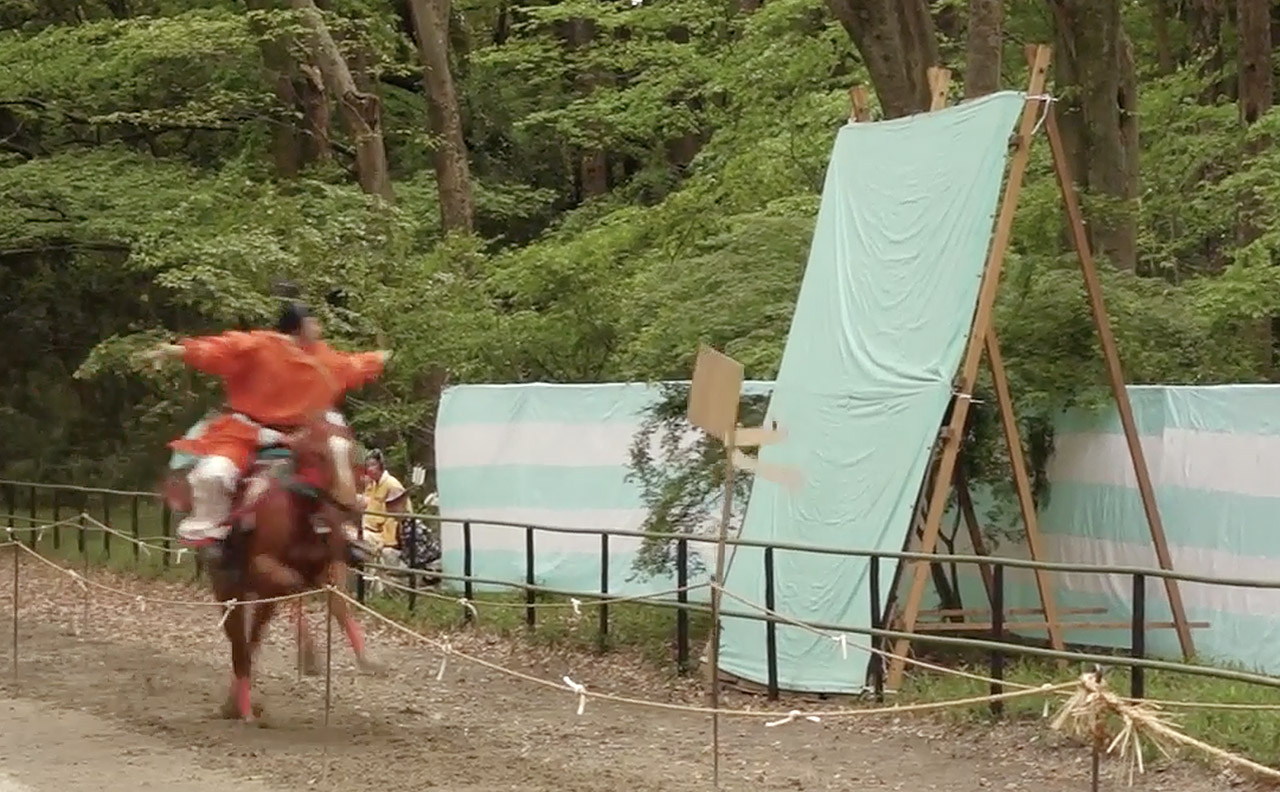
Horseback Archery is Making a Comeback! is taken from a New York Times story title this week and yes, the respected NYT is sending journalists at great expense to look at the rise of horseback archery across Asia. I would suggest that the New York Times attend the many events across the Shinto shrines and Budo demonstrations in Japan to see that horseback archery never went away. The photo above was taken at the Meiji Shrine in Tokyo.
Yabusame, as horseback archery is called in Japan, has long been one of our favorite Japanese cultural events and we rarely miss an opportunity to attend one if our schedule allows. The thunder of the horse and the ground shaking as it gallops by is exhilarating and beyond mere words.
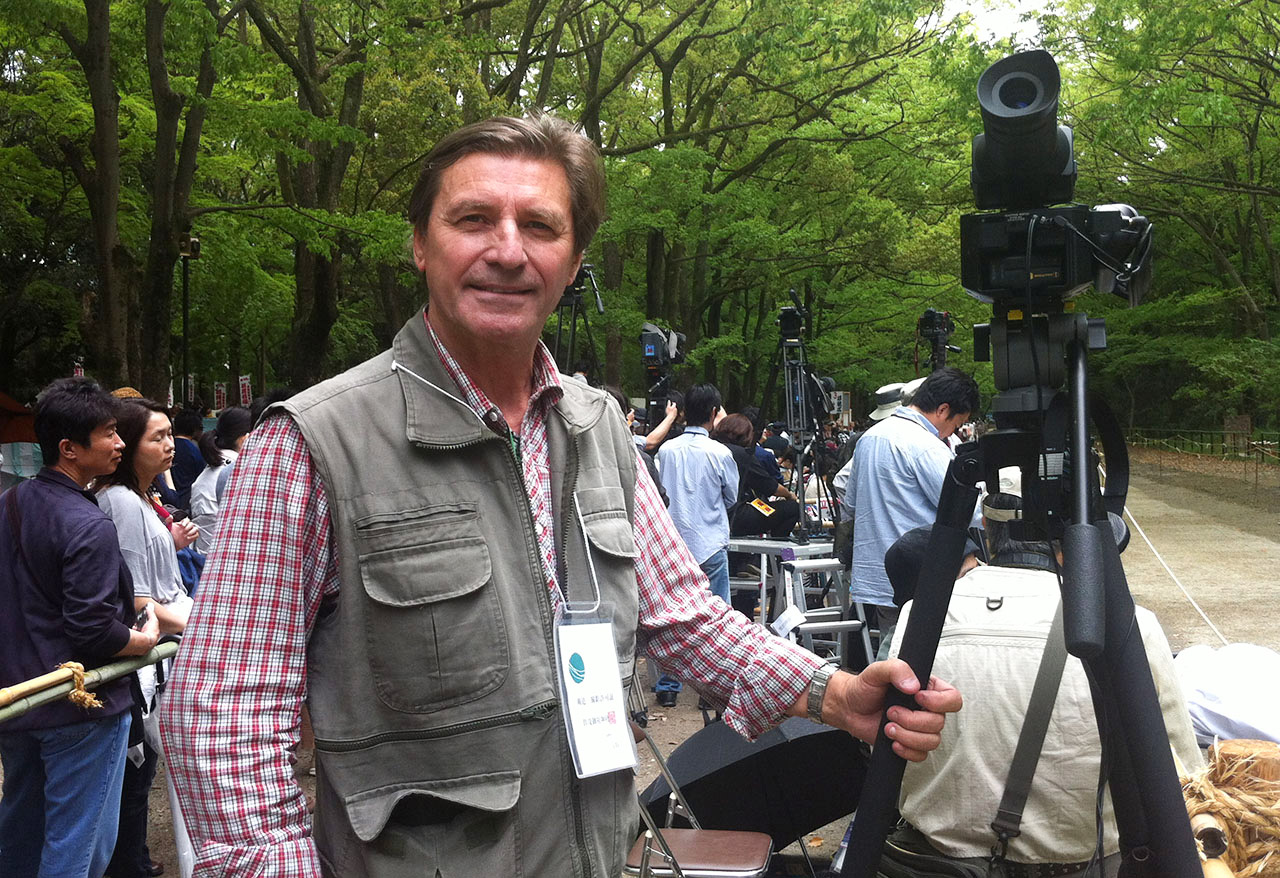
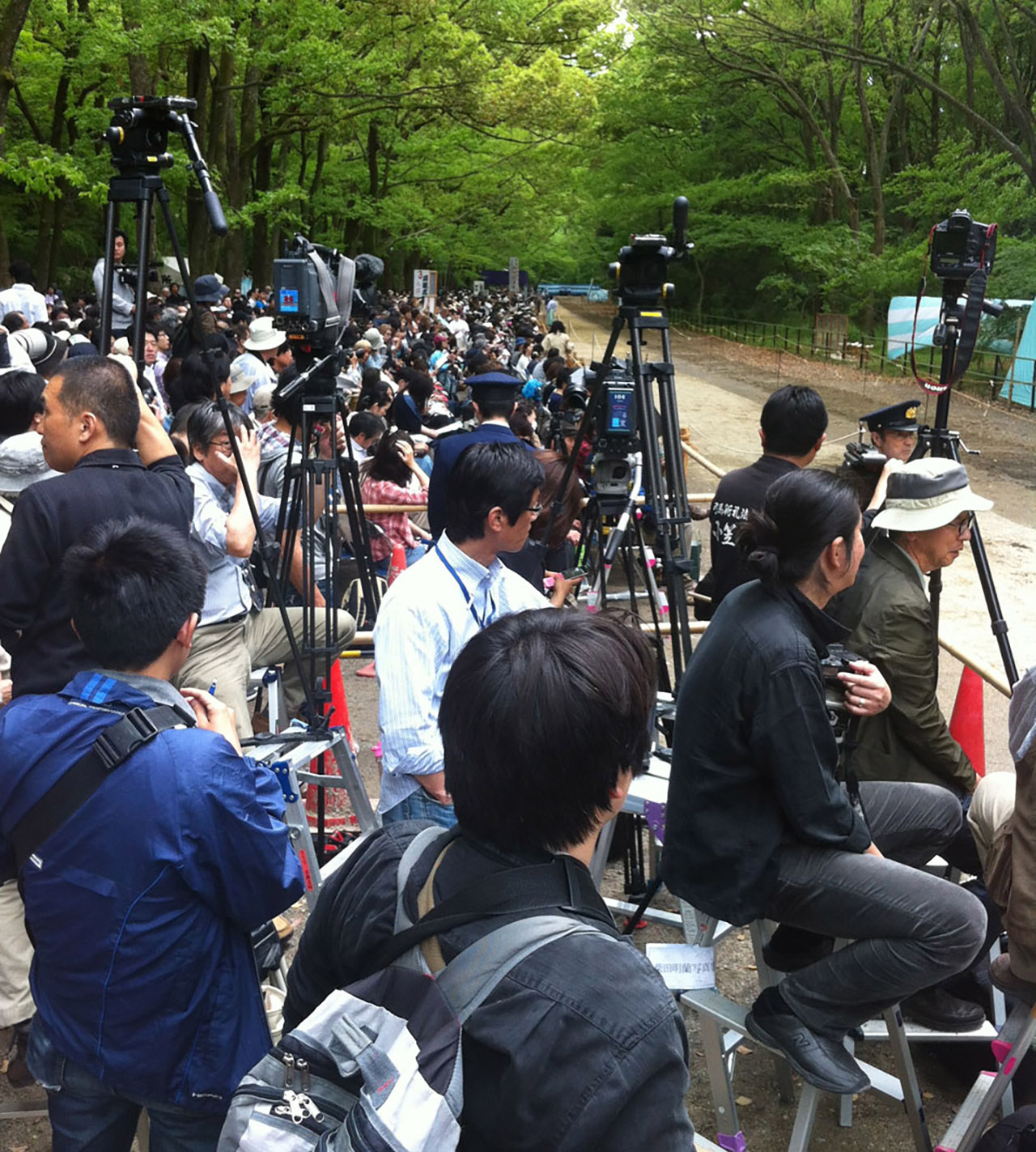
Jon Braeley in the crush of the press area at the Shimogame Shrine yabusame
The New York Times story is focused on horseback archery at the World Nomad Games a tournament across the Middle East and Asia, rooted in ancient warfare and ethnosports, demonstrating battlefield skills that once could earn a warrior acclaim. This is in contrast to Japan, where yabusame, that is, shooting arrows from a galloping horse called kisha, is steeped in ceremony and the rituals of Shinto, and a dedication to the gods, a prayer for universal peace, a rich harvest, and good health. Here I am above, attending horseback archery at the Shimogame Shrine in Kyoto, where the public arrive two hours before the start and the press are packed like sardines, waiting patiently to shoot a photo of the brave archers as they hurtle past on their horse.
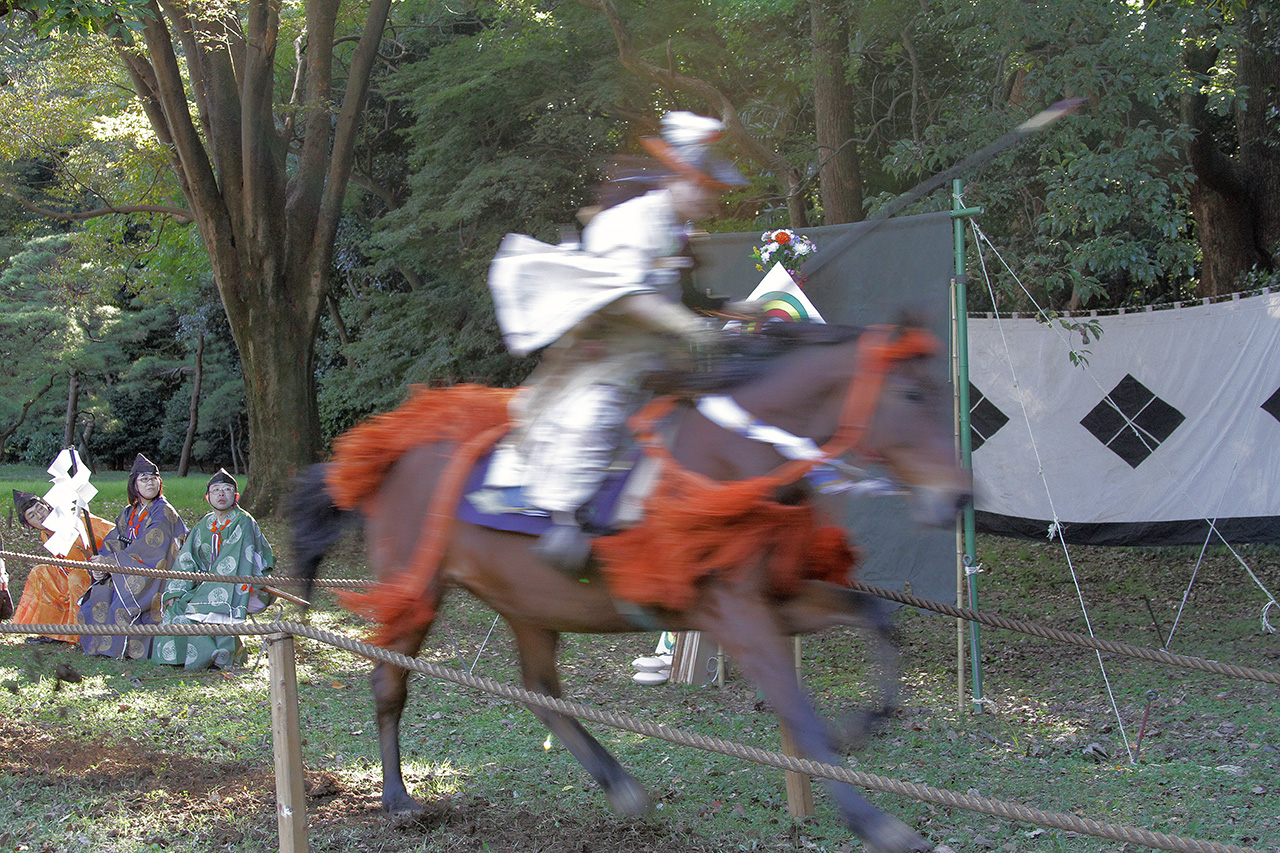
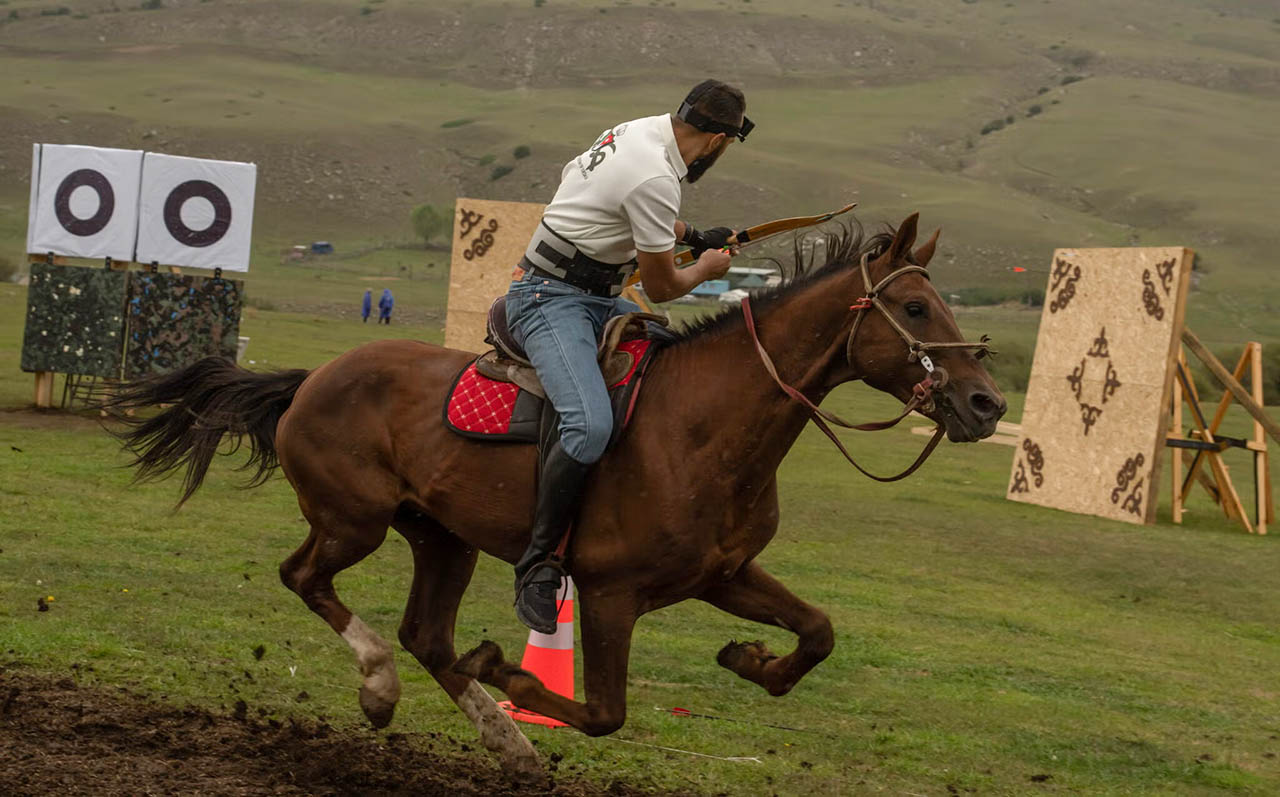
Yabusame photo by Jon Braeley and above, Nomad Games photo by NYT
However, the Nomad Games horseback archery and the Japanese yabusame are very similar in their execution, both archers galloping down a 100 meter long course (yabusame is longer), shooting from their horse at three targets. Here are snippets taken from the NYT story... “People are going back to their histories,” said Mr. Al-Khanazreh, 42, a retired security officer turned full-time equestrian and archery instructor. One competitor, Balazs Vermes, 36, dressed like a 10th-century Hungarian warrior, said he was trying to embody the warrior spirit of his ancestors. "Modern warfare has removed much of the human variable from the battlefield", he said. “Back then if you were good, you had the chance to survive.”
At the Shimogame Shrine I attended, the mounted archers gallop down a track about 250 meters long and fire arrows at three targets. The archer’s cry of “In’yōi!” (in-yo-ee) when he fires each arrow is a reference to yin and yang and a prayer for peace and for good harvests. The movements for changing targets and collecting arrows by the assistants are also governed by reihō concepts (etiquette) passed down through the centuries.
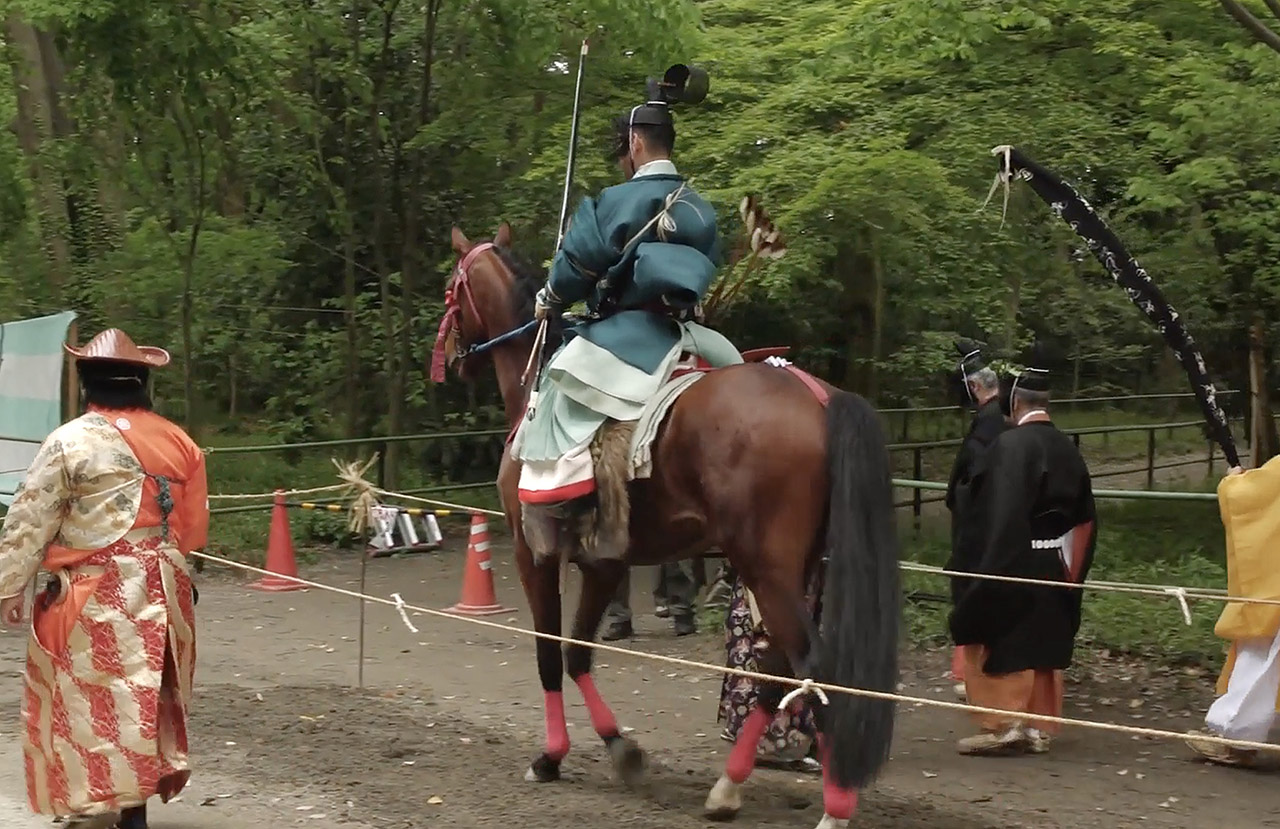
Ogasawara Ryu horseback archery from One Shot. One Life movie
The school of horseback archery I feature in our kyudo documentary One Shot. One Life is Ogasawara-ryū which was established over 800 years ago in the Kamakura period (1185-1333) as a school of archery, mounted archery (yabusame), and etiquette (reihō). The Ogasawara family served as instructors to generations of Shoguns in these disciplines. Ogasawara-ryū etiquette was taught to ancient warriors across Japan as appropriate behavior for the samurai, and became the foundation for martial arts etiquette. Matsumoto Akimasa of Ogasawara-Ryu says, "Generally, people have the idea that because it is equestrian, kisha focuses on horseback riding, but in fact, 70% or more of this consists of how to handle the bow. For this reason, only when the standing shooting is mastered one can draw the bow beautifully on the horse."
Here is an excerpt from a book I am about to publish, Masters of Kyudo, in November 2026.
The first archer on horseback came thundering down the course. The first target was too far for me to see clearly, but seconds later a loud “thwack!” as the archer’s next arrow hit the second target near my position. The rider missed the third target and bolted past me and I could feel the ground shake. The speed of the horse going by is thrilling. The next archer let fly his last arrow and the wooden target nearest to me shattered with a loud splintering crack! The run off path to slow the horse down was very long with many assistants ready to help stop the galloping horse. The fourth archer hit the first target but as he approached the second target he lost balance while placing his arrow on the bow, and fell off the horse The riderless horse continued to gallop past me and assistants rushed bravely toward the animal as it came to the end of the run off. Other attendants ran up the course to take care of the fallen archer, who was being helped to his feet. It was clear to see he was badly shaken by the fall, but he smiled and waved to the crowd as they clapped and cheered when he walked by.
As this scene unfolded, I imagined how it must have been for the samurai in battle, shooting arrows from a horse at full gallop as the enemy charged toward him, all the while making sure the horses legs are not cut from underneath him with a slashing naginata!