November 3: Samurai Spirit at Meiji Jingu
Meiji Jingu Kobudo on November 3 is always marked on the calendar of classical Japanese martial arts (kobudo) schools. On this day, the emperor Meiji's birthday, an annual demonstration takes place in the grounds of the Meiji Shrine of Koryu Embu, classical martial arts going back to samurai. The Nihon Kobudo Shinkokai is the organizer in conjunction with the Meiji Shrine. Visit the website at kobushin.jp
If you are not familiar with Meiji Jingū or the Imperial Shrine, it is located in a large park of the same name and links with Yoyogi Park, between Shinjuku and Shibuya in Tokyo. Meiji Jingū is by far one of the best attractions in Tokyo, and was built in honor of Emperor Meiji and his wife, in 1920. Whenever I am in Tokyo I always take time out of my busy schedule to walk in this beautiful park. The shrine grounds are home to two wonderful dōjōs, the Shiseikan Dōjō and a large Kyūdōjō adjacent, which holds the All Japan Kyūdō Championships, usually on the same holiday, November 3rd.
Video Trailer of Meiji Jingu Kobudo
November 3rd is Culture Day in Japan and the cornerstone date of the festival, featuring over 60 different traditional schools demonstrating historical battlefield arts, usually starting at 9.00am with Aikido demonstrations followed by classical martial arts (kobudo) demonstrations at 10.00am. On the western lawn at around 1.00pm is yabusame or horseback archery which is always a crowd favorite.
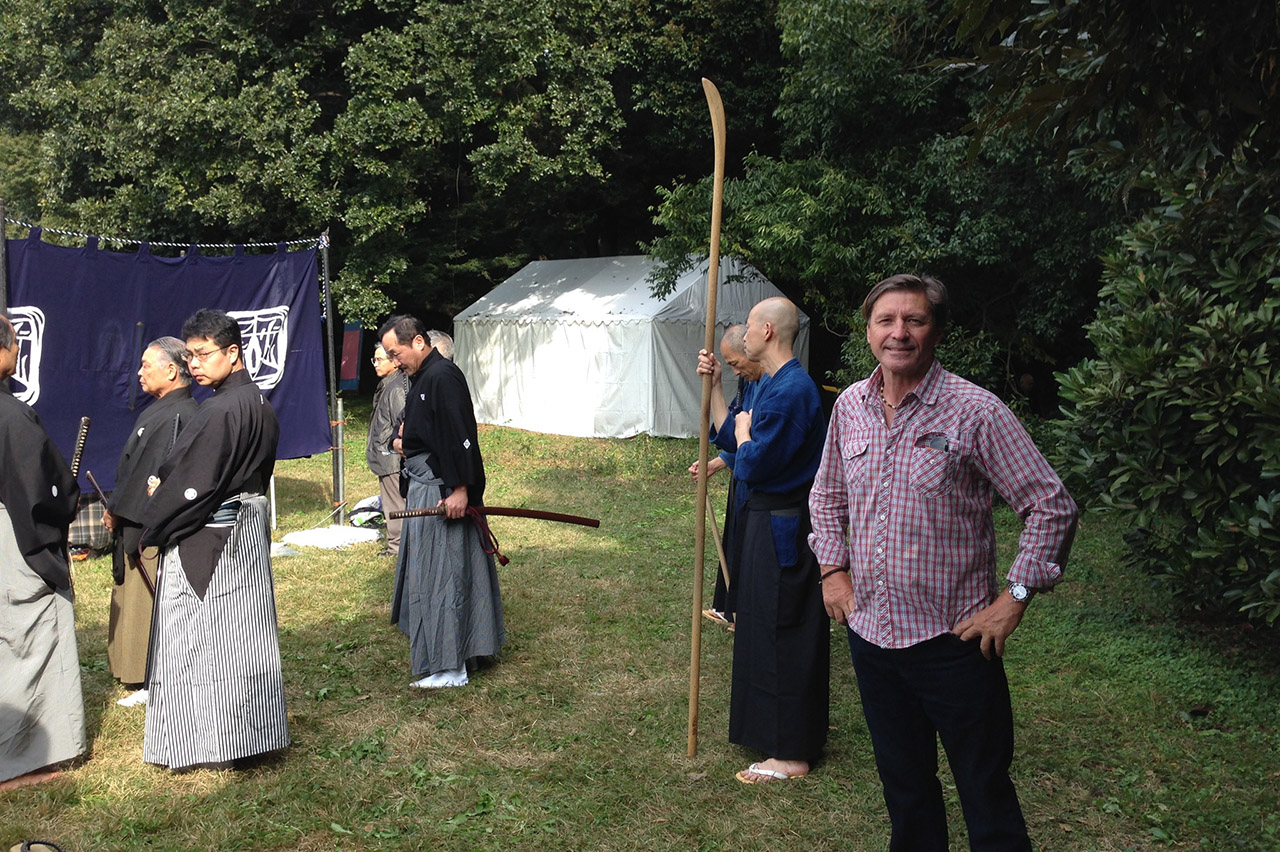
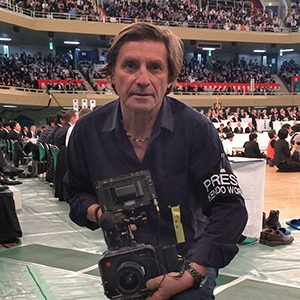
Jon Braeley behind the scenes with the koryu schools at Meiji Jingu
What is Kobudo?
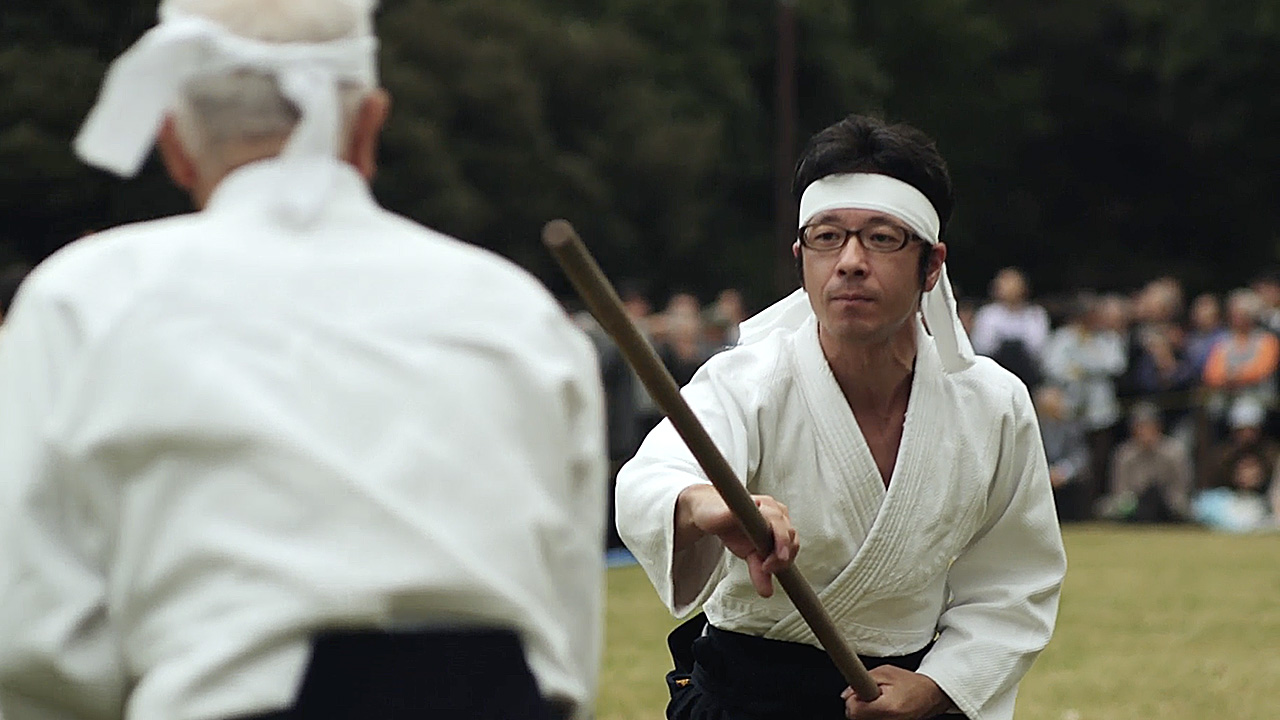
Kobudo are traditional martial arts that predate the modernization of Japan in the Meiji era (1868). It typically refers to martial arts developed for actual battlefield or feudal-era use by samurai, as opposed to gendo (“modern ways”) like judo, kendo, and aikido, which were reshaped in the late 19th and 20th centuries into disciplines focused on self-improvement and sport.
Kobudo is valued as living history and as a way of preserving combat principles, etiquette, and philosophy from the samurai era. Many practitioners see it as a path of discipline and character development, not just technique.
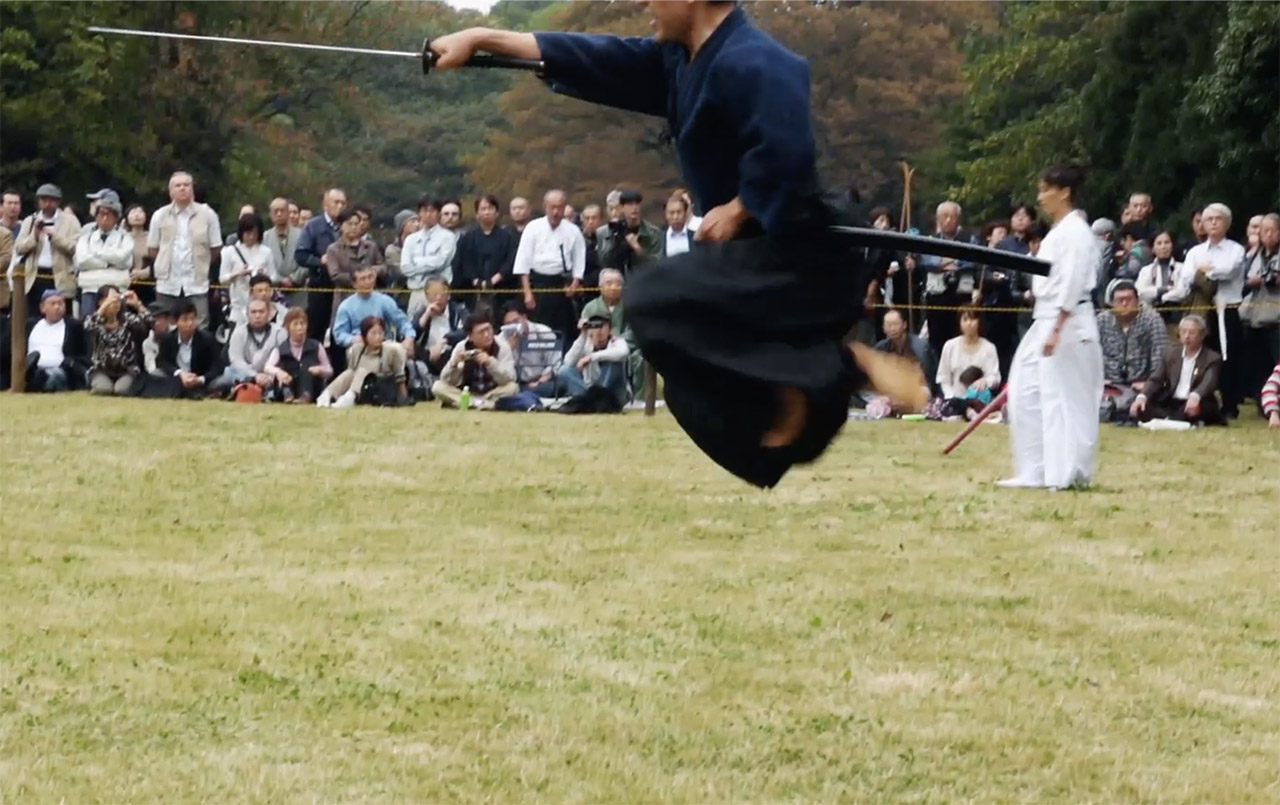
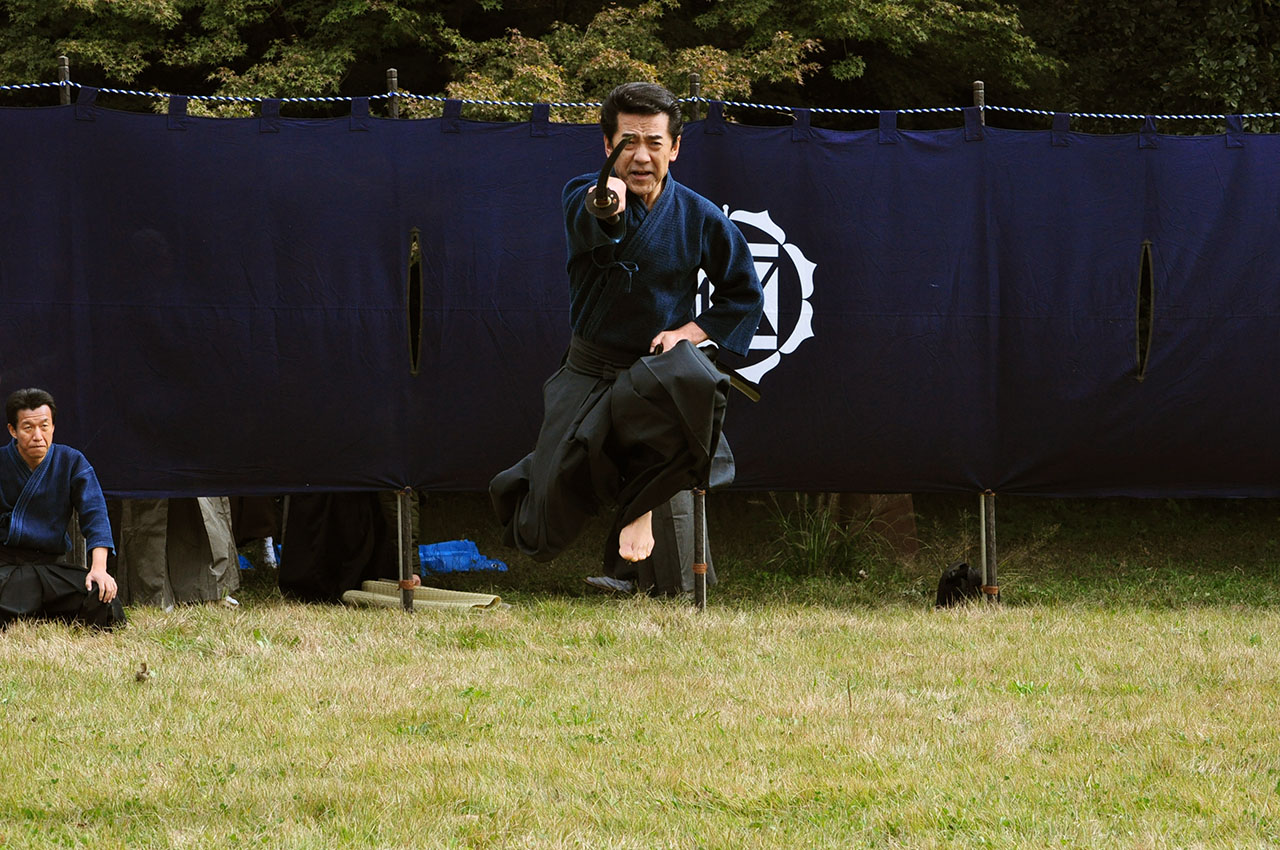
Ōtake Nobutoshi's explosive leap from a kneeling position while drawing his katana
Classical Samurai Sword Arts
The kobudo demonstration is generally focused on Weapons-based training: Sword (kenjutsu, iaijutsu), spear (sojutsu), naginata (glaive), bow (kyujutsu), staff (bojutsu, jojutsu), and others. Unarmed combat: Jujutsu and related grappling arts, are often practiced alongside weapons. The classical martial arts schools (Ryu-ha) are organized into lineages, each with its own curriculum, philosophy, and history. Some trace back over 500 years, such as Tenshin Shoden Katori Shinto-ryu founded around 1480 and the oldest extant Japanese martial arts school in Japan and today is designated as an Intangible Cultural Asset. See my visit to Tenshin Shoden Katori Shinto-ryu in Art of the Japanese Sword.
The Photo Above: Tenshin Shōden Katori Shintō-ryū
In the two photos you see above, Ōtake Nobutoshi Shihan, the son of Ōtake Risuke, the previous guardian of Tenshin Shōden Katori Shintō-ryū, makes a dynamic leap high into the air from a low kneeling position while drawing his katana (sword). It is a spectacular iaijutsu (sword drawing) technique that avoids attack or detection while allowing a surprise and swift aerial cut to the enemy. As you see in my first photo from my video frame, I failed to capture the head of Ōtake shihan, so fast was his explosive leap far above the ground!
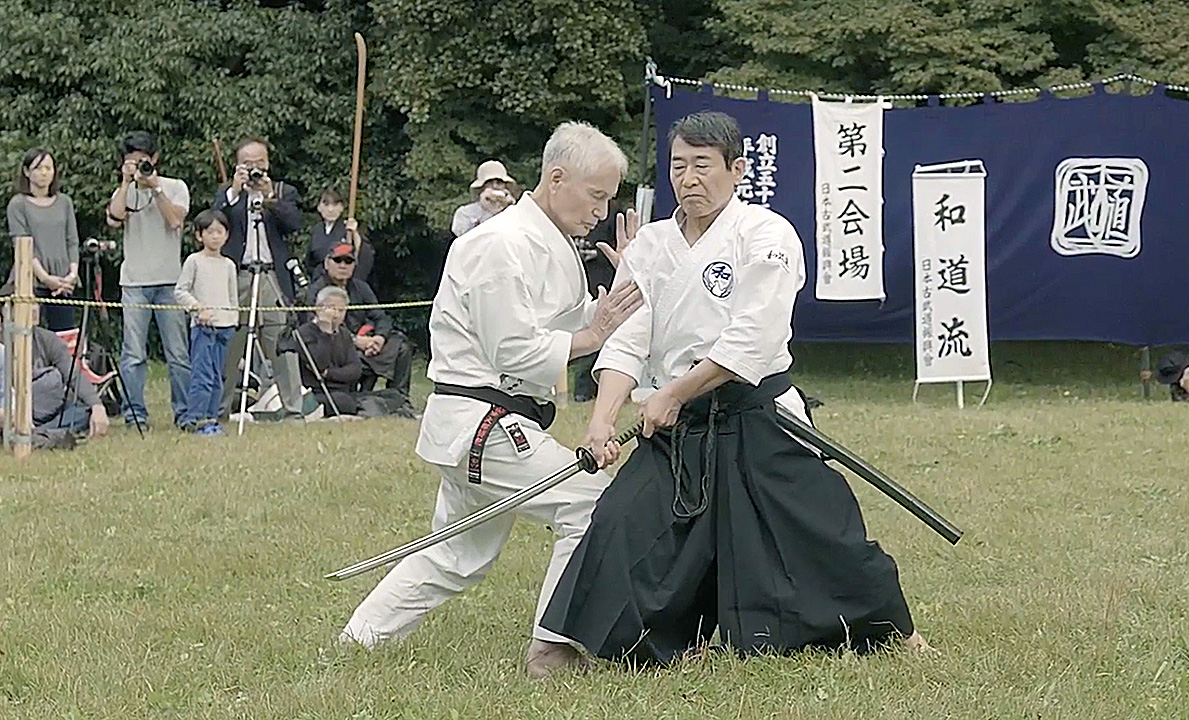
Wado Ryu Karate: an Ancient Lineage
Hironori Ōtsuka, the founding son of Wado Ryu karate (above), embraces his roots in classical budo and koryu at Meiji Jingū where he demonstrates an unarmed defense against a real katana (live blade), which had the crowd holding their breath! More remarkable was afterwards, when I asked Ōtsuka Sensei how he practiced this in the dojo, he told me “Oh we don’t practice this. It’s far too dangerous!. The blade is very sharp, so when we do it habitually one can see what you could call the “ultimate truth.” There really is such a thing. That is why we do not practice and we perform this without rehearsal."
I have visited the Hombu dojo of Wado Ryu karate in Tokyo, a number of times and Ōtsuka sensei always allows me to record his classes and our interviews together. These visits are featured in my Warriors of Budo: Episode Two documentary and the account is also included in my Masters of Budo (Amazon books), where you can read the complete uncut interview.
The Battlefield of Feudal Japan is Alive!
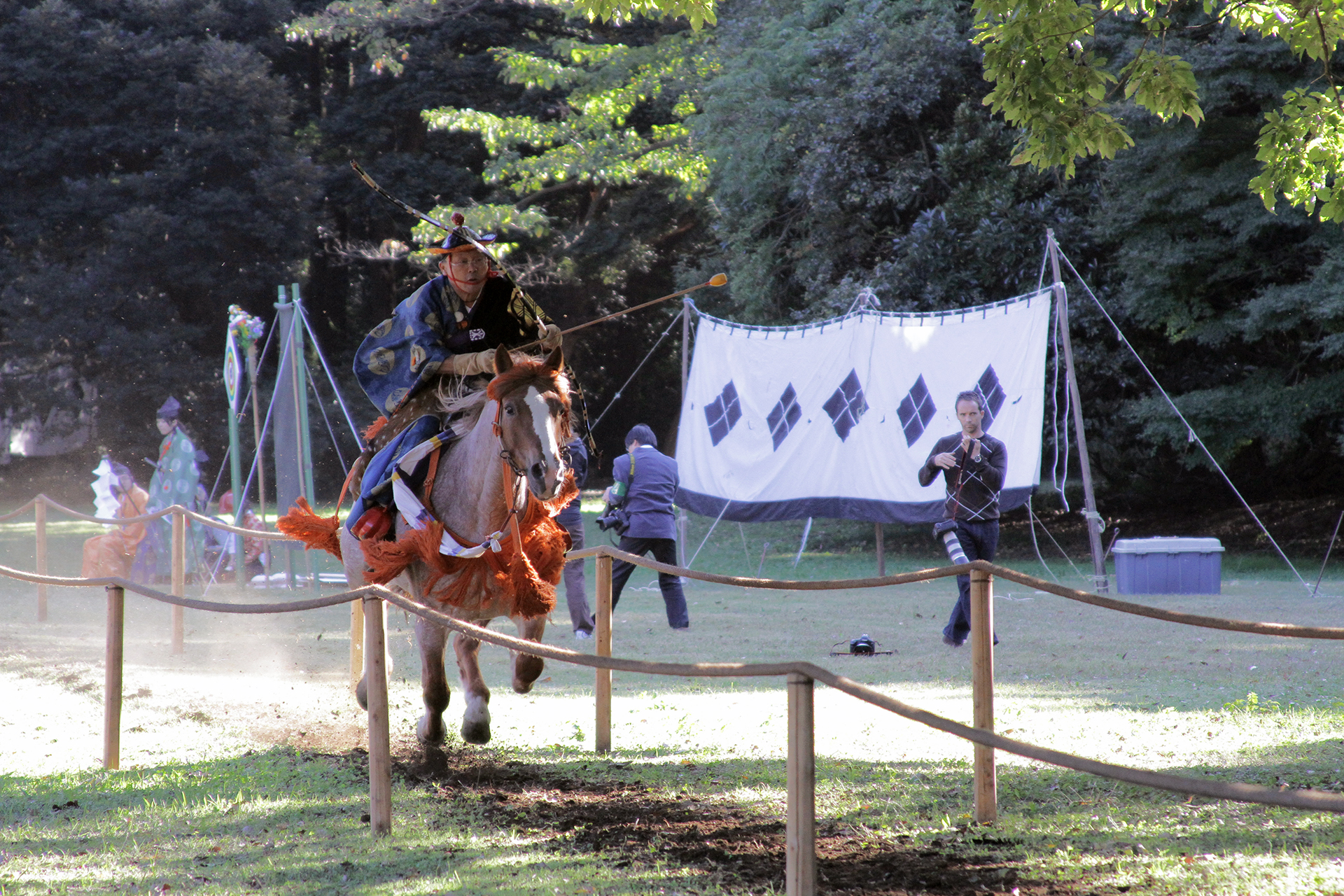
Yabusame or horseback archery takes place at the beginning of the afternoon in the Meiji Jingu and is one of the most popular events of this day. You can read a recent blog post of how horseback archery is making a comeback. Horseback and ceremonial archery is featured in our kyudo movie, One Shot. One Life.
The following are my thoughts when I was filming yabusame just after I started filming..."I did not have to wait long as I felt a vibration in the ground below my feet. The crowd started to roar in anticipation. I checked the camera's exposure settings, focus and finally the audio. I was ready. The mounted archers gallop down a track about 250 meters long and fire arrows at three targets. The archer’s cry of “In’yōi!” (in-yo-ee) when he fires each arrow is a reference to yin and yang and a prayer for peace and for good harvests. The movements for changing targets and collecting arrows by the assistants are also governed by reihō concepts (etiquette) passed down through the centuries.
The first archer on horseback came thundering down the course. The first target was too far for me to see clearly, but seconds later a loud “thwack!” as the archer’s next arrow hit the second target near my position. The rider missed the third target and bolted past me and I could feel the ground shake. The speed of the horse going by is thrilling. The next archer let fly his last arrow and the wooden target close to me shattered with a loud splintering crack! The run off path to slow the horses down is very long with many assistants ready to help stop the galloping horse. As this scene unfolded, I imagined how it must have been for the samurai in battle, shooting arrows from a horse at full gallop as the enemy charged toward him, all the while making sure the horses legs are not cut from underneath him with a slashing naginata!
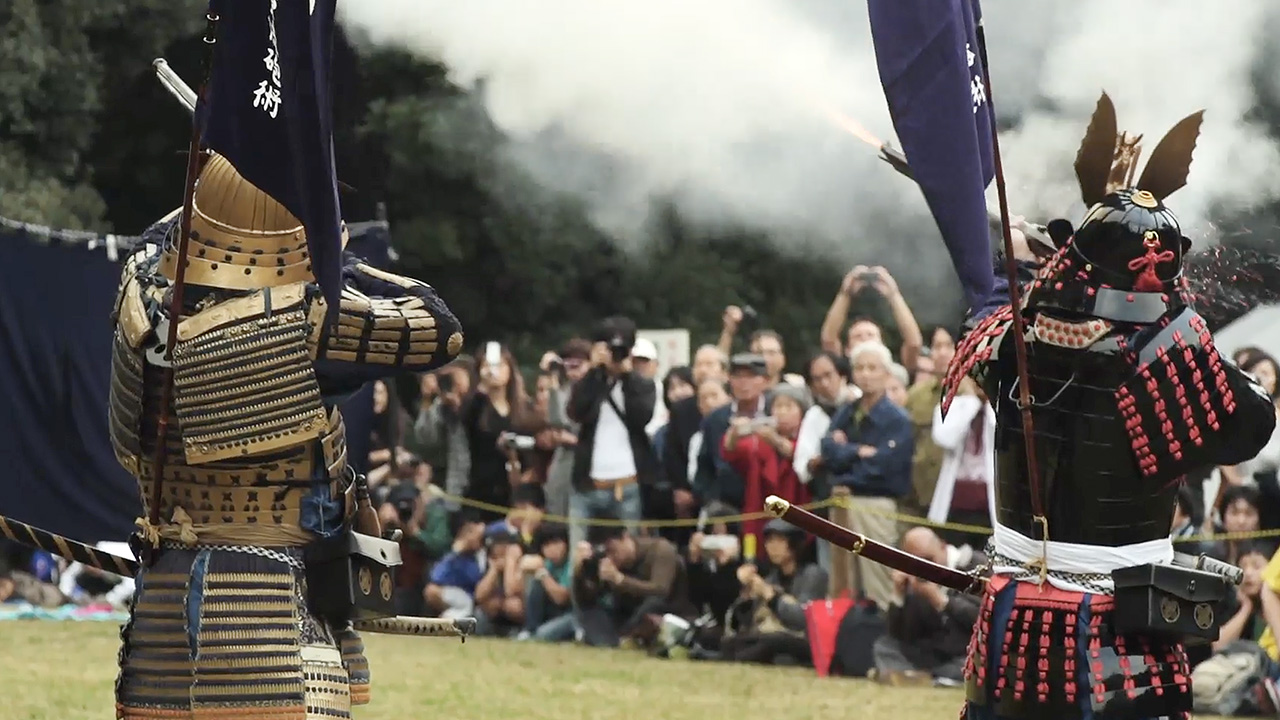
Samurai and Firearms ... Love & Hate!
Yes the Samurai used firearms as early as the 13th century, but it was in 1543 when Portuguese matchlock firearms were brought into Japan that their use rapidly increased. At this time, a good samurai archer was still more effective in battle than a samurai with a rifle which had to be loaded and charged. Then again, a low-ranking soldier could shoot a rifle and they were expendable! At the Meiji JIngu, the final demonstration, usually at 4pm, is a row of samurai shooting matchlock firearms, ending in an explosive dramatic shooting of a cannon on wheels. You may need to cover your ears if you get as close as I do!!